20 July 2026 · Field Notes · The busineess side
An engineer in Venture Capital
Now you're a loop around a business.
When you break from building to help companies build, your problem-solving skills are truly revealed. The economy can't be debugged. People are stranger machines.
I didn’t leave engineering for venture capital. Venture capital found me through engineering. At Meta I was a partner engineer (now known everywhere as an FDE). I was the glue. A who sits with an outside company and works as a bridge to make integrations work. Then Oculus, during the years the metaverse was the bet, where my job drifted into deciding which companies were worth funding to build apps for the store. A headset with no content is a paperweight.
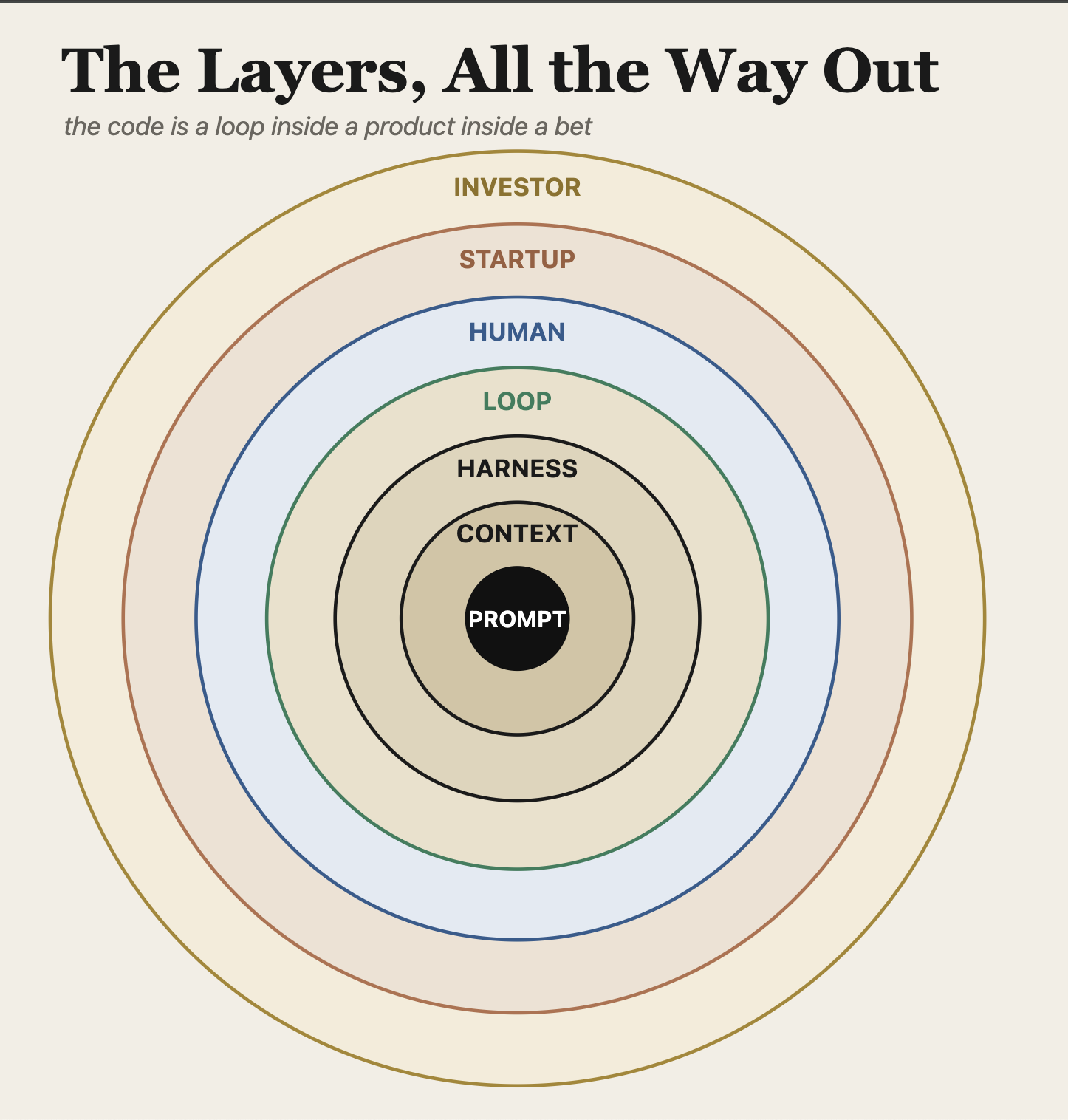
Take away the code. You're still engineering.
Working in VC sharpens an ability to discover the root technical abilities and weaknesses, if you already have that ability.
Same job, different title
I was had already been evaluating systems and companies while guiding them and giving them real technical and product support. And then, sometimes funding them. Someone has to distinguish hype from noise.
When I moved into VC proper it wasn’t a leap. It was work with a different title: find companies, go deep, make moves.
I didn’t switch careers. I renamed one.
What the day-to-day looked like
Talking to a lot of founders and developers. And when I found a company I believed in, learning everything I could about them. The technical due diligence was my edge that VCs craved, a strength few investors have. I could get into the hardware or the software and tell you whether it was BS with good marketing, or tangible and legitimate, or early but going somewhere. I wasn't looking for code smell exactly. But my nose got sharper.
Evaluating people. Reading a founder. Talking to the team without leadership around to get a sense of the truth. That’s a muscle many engineers never build. (Plus the spreadsheets, the forecasting, the finances. Every job has the grind.)
Most VCs can’t read the code or the hardware. Even if the startup's tech wasn't my domain, I had an edge. That’s rarer than it should be.
What I got wrong
I assumed VC was the pinnacle of tech with the smartest people, the ones who’d earned it, the one corner of the industry that ran on merit. It doesn’t. Mostly I found regular people who had been right once, or just at the right place at the right time.
I expected true meritocracy.
That’s not cynicism. It’s the demystification you get from being in the room.
Why I'm building again
I was too far from building, and I like to build. I also like honesty and there’s an undeniable honesty in code. Software is deterministic: it works or it doesn’t. VC is the opposite. You make a bet and wait years, maybe decades, to learn if you were right. Even then the math often doesn’t work.
There’s an honesty in code.
I needed to be close to the product again and in the room where thing gets made, not outside the loop and talking about it. And leaving a fund doesn’t mean leaving investing.
You don’t need a fund to be an investor!
Being an "investor" is easy. Tell people you're investing. Deal flow is never a problem. Angel checks are easier than ever to write. I left because I missed building, not because I stopped believing in backing builders.
Power law, times a hundred.
Software runs on a power law. Only the best lines of code pass code
review. Only the best systems survive. Startups run on a power law.
Venture multiplies it. You bet, then wait years to find
out if you were right. You don't have to be at a fund! You
can do this while you build.
What it left me with
It sharpened how I scope and ship product. Every conversation forced one question to the front: will anyone actually want this, or use it? I thought about that before, of course. Now I think about it constantly, because I watched it be the thing that decides whether a company lives or money evaporates. The only exception to having to ask will anyone actually want this, or use it? is building purely for yourself. Even then you’re building for your future self, which is the same skill: empathy for someone who isn’t you, right now.
VC also drills the zoom in and out. You have to hold a meta-level thesis and the granular technical reality in your head at once, and moving between them constantly. Countless company evaluations made it even more reflexive. And, do you ask good questions?
Perspective and questions are 99% of the job.
And I proved: I can talk to anyone. C-suite, solo founder, the engineer three levels down doing the actual work. I can read a person, a problem, or a product on sight, sometimes too well.
Tech is the challenge. Tech never stops evolving. Look at how fast AI is going. Every week there’s something new to learn. That’s exactly what I want. Give me the hard stuff. That’s what keeps me here.
Choose the challenge
The business side is the easy side. The technical side is where the challenge lives.
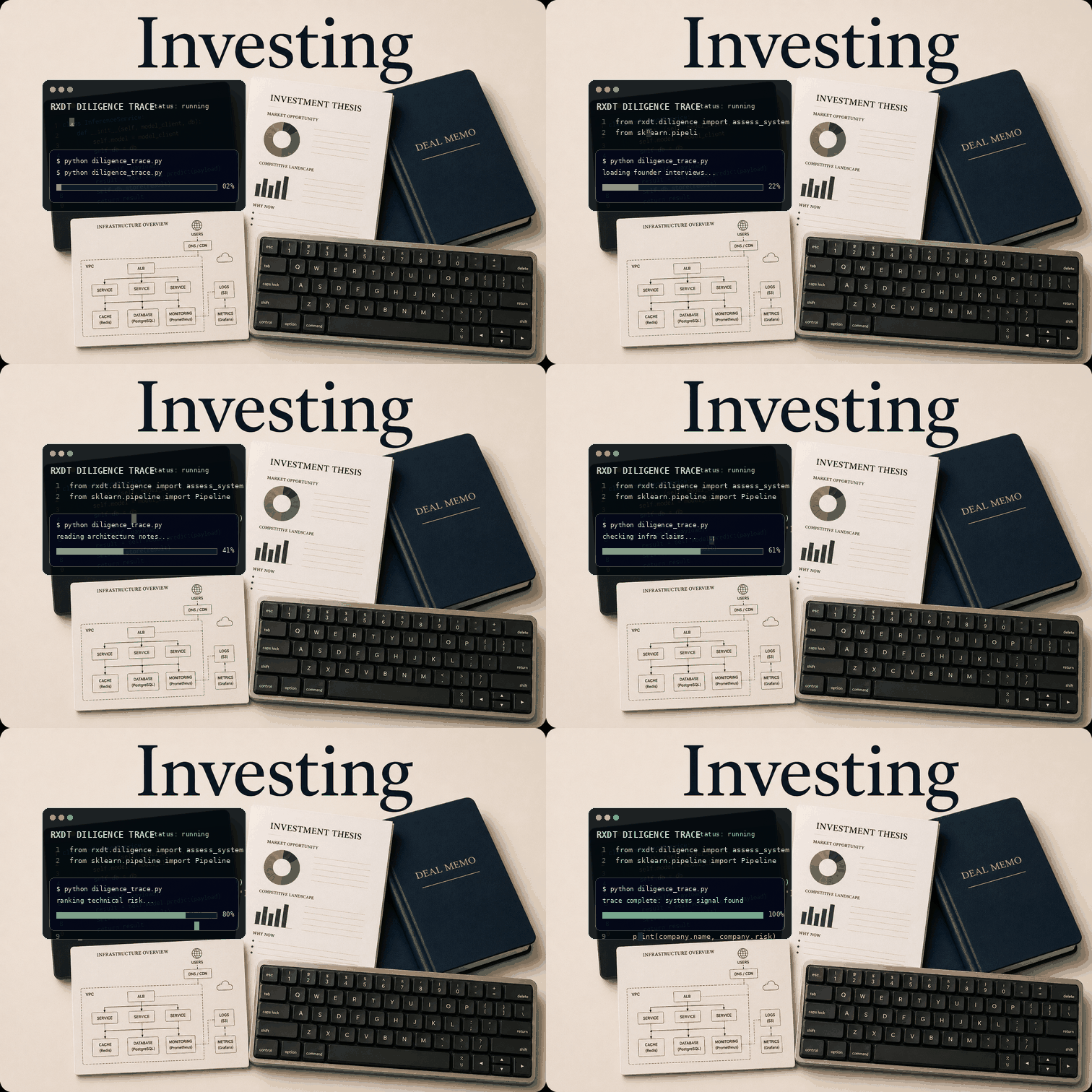
An engineer’s field notes from time in venture capital, and what
it left behind.
More writing:
A Frontend Loop Needs a Real App
·
Stop Prompting, Start Engineering the Loop
·
The First (and Last) Intent-Inference Conference.
Back to Rox dT